
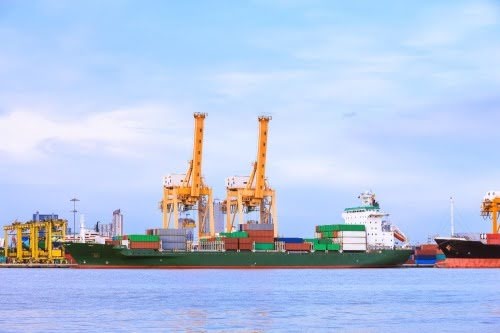
Europe is grappling with a new economic challenge as its industries face increased competition from China, potentially leading to job losses and increased dependency on Beijing. Trade experts and industry representatives warn that the influx of Chinese components into European manufacturing is reminiscent of the “China shock” experienced by the United States 25 years ago. This initial shock had significant repercussions on local industries, displacing jobs and creating a dependency on Chinese imports. Jens Eskelund, the European Chamber of Commerce president in Beijing, highlighted the growing concern over the volume of components imported from China, which is embedding deeper into the EU’s industrial landscape.
As the European Union (EU) contemplates its response, a report from earlier this week suggested that the bloc might require companies to diversify their suppliers for critical components. European commissioners are set to convene on May 29 to discuss potential measures. Oliver Richtberg of VDMA, representing the machinery and equipment manufacturing industry, praised the EU’s proactive stance but noted that Chinese state subsidies and favorable exchange rates are making it difficult for European products to compete. German economist Jürgen Matthes pointed out that currency shifts have potentially undervalued the yuan by 40% against the euro, forcing procurement decisions that favor Chinese imports.
The reliance on Chinese imports is having tangible effects on Europe’s industrial sector. Germany, for example, saw the loss of 22,000 machinery industry jobs last year. Data from Soapbox, a China trade analysis platform, reveals alarming statistics on the EU’s import dependency, with 88% of amino acids and 96% of polyhydric alcohols by volume coming from China. The risk, according to a trade consultant from the platform, is that such dependencies could render EU production economically unviable, thereby increasing reliance on Chinese inputs.
China has now surpassed the United States as Germany’s top trading partner, with its trade surplus with the EU growing significantly. Between 2024 and 2025, China’s surplus with Germany alone doubled, underscoring the imbalance in trade relations. The EU is considering legislation such as the Industrial Accelerator Act and updates to the Cyber Security Act to protect its industries, but these measures will not take effect until 2027. Andrew Small from the European Council on Foreign Relations noted that China remains underrepresented in discussions about its impact on European industry, emphasizing the need for immediate action.
While the EU’s legislative efforts face delays, the geopolitical implications of China’s economic influence loom large. The EU is challenged to balance its response to avoid exacerbating tensions with Beijing, which is seen as having the upper hand in trade discussions. Small pointed out that despite the EU’s attempts at countermeasures, China’s strategy may involve complicating processes to maintain its export flow. The situation demands a strategic and united approach from EU member states, as previous attempts at imposing tariffs have proven insufficient to address the trade imbalance effectively.