
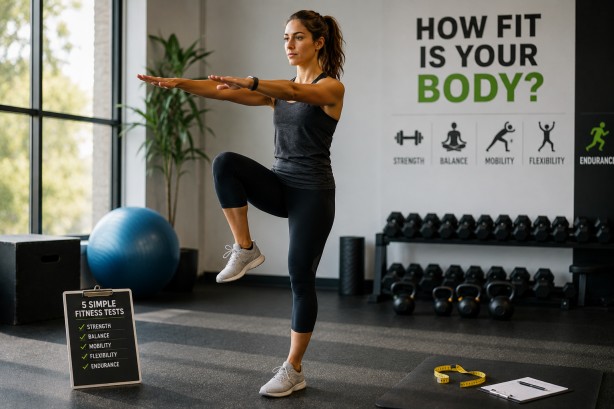
Functional fitness extends beyond the realm of just lifting weights or enduring long runs. It encompasses the ability to execute everyday movements, such as squatting, rising from the floor, and maintaining balance. These actions can provide valuable insights into one’s physical capabilities. A series of five simple exercises can help assess various aspects of physical ability, including strength, flexibility, mobility, grip, and balance. These exercises typically require minimal equipment and can be performed safely at home.
The first exercise, the deep squat hold, involves standing with feet hip-width apart and lowering into a deep squat while keeping the heels on the ground, aiming to maintain the position for up to 60 seconds. This movement offers a test for mobility in the ankles, knees, and hips, as well as lower-body strength and control. If the position cannot be held comfortably or the heels lift off the floor, it may indicate a need for improved mobility or lower-body control.
Another exercise is the dead hang, which requires holding onto a secure pull-up bar with arms extended for about 30 seconds. This activity tests grip strength and upper-body endurance while also demanding shoulder stability and control. Beginners should ensure they use a properly secured bar and avoid the exercise if there’s a risk of aggravating any existing injuries.
Getting up from the floor without using hands, knees, or forearms is another straightforward movement that combines lower-body strength, balance, coordination, and mobility. While it can highlight areas needing improvement, variations in performance are expected due to factors such as age, flexibility, past injuries, and fitness level, and it should not be seen as a definitive measure of health or longevity.
The forward fold exercise involves bending forward with straight legs to see how far the hands can reach, primarily testing flexibility in the hamstrings and back muscles. Inability to touch the floor is not necessarily indicative of poor health, as flexibility varies among individuals and can be enhanced over time with proper stretching and mobility exercises. Finally, single-leg balance, which involves standing on one leg and possibly closing the eyes to increase difficulty, tests balance, proprioception, and ankle stability. It’s important to perform this exercise in a clear, safe area to quickly access a stable surface if necessary. Collectively, these exercises offer a snapshot of functional fitness, allowing individuals to identify areas for improvement through consistent, safe exercise. They are not meant as medical or diagnostic tests, and performance may be influenced by factors like age and personal fitness history.