
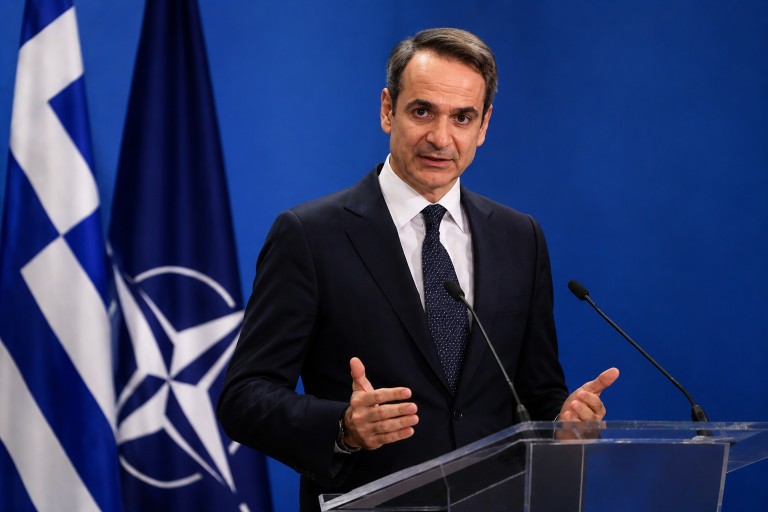
In a recent development, Greek Prime Minister Kyriakos Mitsotakis refrained from directly addressing reports about the potential resumption of F-35 fighter jet sales to Türkiye by the United States. Speaking ahead of an important NATO summit in Ankara, Mitsotakis emphasized the importance of NATO allies considering regional security concerns. He reiterated Greece’s commitment to improving relations with Türkiye through dialogue and cooperation, underscoring the necessity for sensitivity to the security issues affecting all member states.
The remarks from Mitsotakis came in the wake of U.S. President Donald Trump’s indication that Washington might lift restrictions on defense cooperation with Türkiye. This includes the possible sale of advanced F-35 fighter jets and the easing of sanctions under the Countering America’s Adversaries Through Sanctions Act (CAATSA). Such developments highlight the ongoing complexity in NATO’s internal dynamics as the alliance navigates the various interests of its member countries.
Despite ongoing diplomatic efforts to ease tensions, Greece and Türkiye remain at loggerheads over several contentious issues, particularly regarding maritime boundaries and territorial claims in the Aegean Sea and the Eastern Mediterranean. These disputes continue to pose significant challenges to their bilateral relations, even as both nations are part of the NATO alliance.
Mitsotakis’s call for a balanced approach within NATO reflects the delicate nature of the geopolitical landscape in the region. The potential resumption of F-35 sales to Türkiye is seen as a critical point of contention, given the historical disputes between the two countries. Both Greece and Türkiye have been working towards bettering their relations, but longstanding disagreements over territorial waters and airspace remain unresolved.