
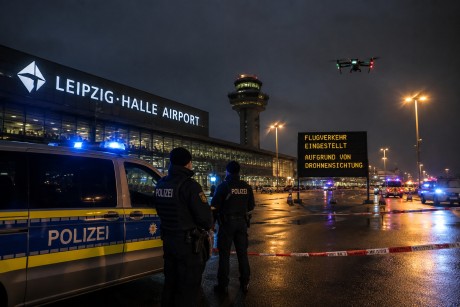
Germany has leveled accusations against Russia, alleging its involvement in a drone attack at Leipzig/Halle Airport. The incident is described as part of a broader pattern of hybrid attacks aimed at destabilizing Germany and inflicting significant damage. Interior Minister Alexander Dobrindt and Foreign Minister Johann Wadephul have claimed that evidence points to the Russian state providing both the equipment and expertise necessary for the attack. It is further alleged that lower-level operatives were recruited to carry out the plan, which involved a drone carrying explosives discovered in the airport’s security area on August 4, near a Ukrainian Antonov cargo plane used for transporting weapons to Ukraine. Although the explosive device did not detonate, authorities noted that it had the potential to cause extensive damage.
Further investigation uncovered traces of the military explosive hexogen close to the airport, along with another drone, leading authorities to initially suspect a second drone’s involvement, though this assessment has since been re-evaluated. In response to these findings, Germany has announced a series of measures against Russia, including additional sanctions, stricter controls on Russian nationals entering the country, and new restrictions on individuals linked to Russian activities. Measures are also being considered against Russia’s “shadow fleet,” which is used to transport oil and other goods. Moreover, Berlin is advocating for a new European Union sanctions package targeting more companies and organizations with Russian ties.
Despite these actions, Foreign Minister Wadephul emphasized that Germany is not at war with Russia but has increasingly become a target of hybrid warfare tactics, which encompass alleged sabotage, disinformation, threats, and destabilization efforts. The incident at Leipzig/Halle Airport has drawn solidarity from Germany’s European and NATO allies, who have underscored the need for a unified response to what they perceive as an escalating hybrid threat from Russia. European leaders have insisted that such attacks cannot go unanswered.
Russian President Vladimir Putin has denied the accusations and criticized the proposed sanctions, arguing that they are detrimental to Germany’s interests. The German government has shared its investigation findings and response plans with NATO and European partners. NATO Secretary General Mark Rutte confirmed that Germany presented evidence implicating Moscow, while European Commission President Ursula von der Leyen assured continued support for Germany.
The drone incident at Leipzig represents a notable decline in German-Russian relations, which have already been strained following Russia’s full-scale invasion of Ukraine. German officials and security experts warn that this incident might be indicative of a broader pattern of suspected Russian-linked activities across Europe, including acts of sabotage, drone-related incidents, and other security threats. Several European countries are actively investigating potential connections between these occurrences.