
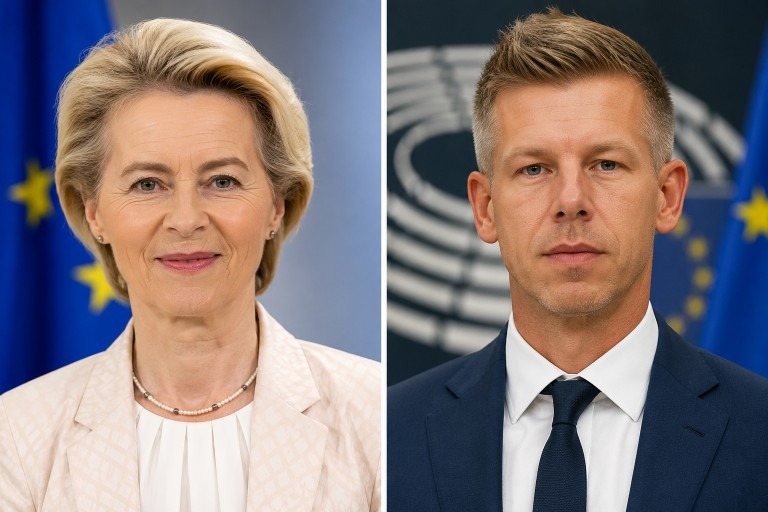
Hungary has secured a pivotal agreement with the European Commission that will release billions of euros in European Union funds previously frozen, contingent upon the country’s commitment to implementing a series of reforms. European Commission President Ursula von der Leyen announced that Hungary has initiated measures to address issues concerning transparency, governance, and the management of EU funds. Among the planned reforms are bolstering anti-corruption safeguards, enhancing oversight mechanisms, and joining the European Public Prosecutor’s Office.
The agreement unlocks substantial funding for Hungary, earmarked for infrastructure, energy security, housing, transportation, and business development projects. The total package, confirmed by Hungarian Prime Minister Péter Magyar, amounts to €16.2 billion in EU funding. Magyar hailed this as a significant boost to the nation’s economic development and investment plans. Additional funding could be released upon further reforms, including those related to higher education and academic governance.
Moreover, the agreement facilitates the reintegration of Hungarian students into the Erasmus exchange program starting in the next academic year, marking a positive development in educational exchanges. This step is part of broader efforts to improve Hungary’s relations with the European Commission, following years of contention over issues such as governance, judicial reforms, and EU budget allocations.
While the funding agreement signifies progress, migration policy remains a contentious topic between Hungary and the EU. Prime Minister Magyar reiterated Hungary’s commitment to stringent border controls to curb illegal migration while fulfilling its European obligations. He underscored the importance of protecting the EU’s external borders and affirmed that Hungary has no intentions to establish migrant camps within its territory.
This development signifies a considerable advancement in thawing the strained relations between Hungary and the European Commission, paving the way for increased collaboration and mutual understanding on several key issues affecting the region.