
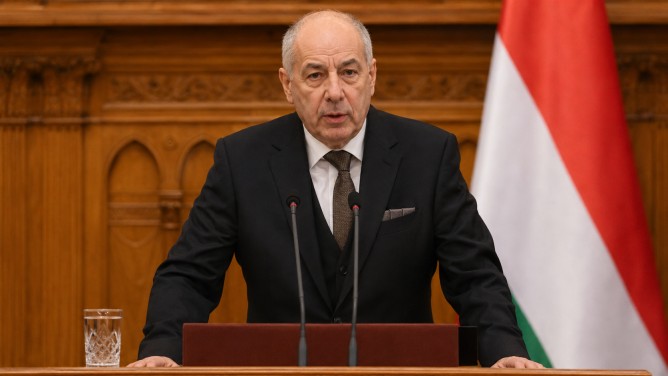
Hungary is caught in a constitutional conflict after lawmakers pushed forward an amendment aimed at prematurely ending President Tamás Sulyok’s term in office. This move, supported by the parliamentary majority, has sparked a legal confrontation since the amendment requires the president’s signature to become law, essentially mandating him to curtail his own mandate.
President Sulyok, addressing the “Day of the Courts,” underscored the importance of upholding the rule of law and maintaining judicial independence, advocating that legal principles should transcend political agendas. Many viewed his comments as a direct response to the contentious constitutional issue. In a statement, the president’s office stressed the significance of respecting constitutional norms and cautioned against the unrestrained exercise of parliamentary authority.
Under the current constitution, legal scholars suggest that President Sulyok’s options are constrained. He has the possibility of challenging the amendment by referring it to the Constitutional Court on procedural grounds. However, should the court find no legal flaws, he would be obliged to sign the amendment. Failure to do so could lead lawmakers to initiate impeachment proceedings or declare him temporarily incapacitated, allowing the parliamentary speaker to assume presidential duties and enact the legislation.
The proposed constitutional amendment has intensified scrutiny regarding the rule of law in Hungary. Legal experts argue that any changes to the constitution should adhere to principles of legal certainty and safeguard the autonomy of public institutions. This situation has not only highlighted the immediate power struggle but also raised broader concerns about the balance of power and the independence of Hungary’s democratic institutions.